


Specifying Production Furniture for Hygienic Food Factories
Production furniture is an integral part of the food factory environment. From stainless steel tables and ingredient preparation stations to draining tables and specialist workstations, its design can influence hygiene, workflow, operator efficiency and the practical use of production space.
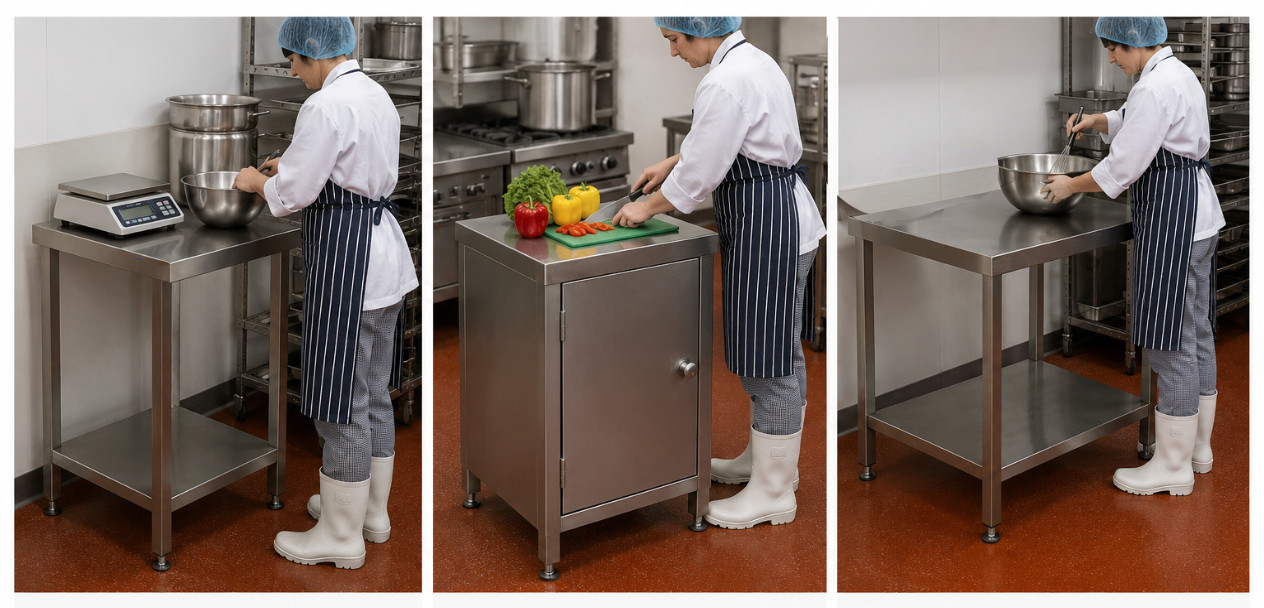
In high-care and hygiene-critical areas, production furniture should not simply be specified according to the dimensions available. Material selection, fabrication, cleanability, drainage, mobility, ergonomics and integration with the surrounding process all need to be considered.
For food factory engineers, the starting point should therefore be less about which table will fit and more about what the workstation needs to achieve.
Production Furniture as Part of the Process
Production furniture can be among the most frequently used equipment within a food manufacturing facility.
Throughout a production shift, work surfaces may be used for ingredient preparation, product handling, inspection, decanting, equipment storage and other process-related activities. Their location can also influence the movement of operators, ingredients, utensils and containers through the production area.
When specifying production furniture, engineers should consider:
What activity will take place at the workstation?
What products, ingredients or equipment will be handled?
How will the workstation and surrounding area be cleaned?
Is drainage required?
Does the equipment need to be mobile?
Is integrated storage needed?
How does the workstation fit into existing product and personnel flows?
Considering these factors at the specification stage can result in equipment that is better suited to both production and hygiene requirements.
Designing for Hygiene and Cleanability
In hygiene-critical food production environments, cleanability should influence equipment design from the outset.
Smooth surfaces, appropriate finishes, hygienically considered fabrication and good access for cleaning can all help production furniture integrate effectively into established hygiene regimes. Fully welded stainless steel construction also provides the strength and durability required for demanding manufacturing environments.
Gilwood manufactures table options with 304-grade stainless steel tops, providing robust working surfaces for a wide range of food production applications.
However, material selection alone does not determine whether a workstation is suitable for a particular environment. The detail of the design is equally important.
Frames, undershelves, castors, work surfaces and interfaces with surrounding equipment should all be considered according to the application. Engineers should also assess whether hygiene teams can readily access and inspect the workstation itself, as well as the floor, walls and equipment surrounding it.
“When we design production furniture, we look beyond the dimensions of the table itself. We need to understand what the operator is doing, what is being handled, how the area is cleaned and how that workstation fits into the wider production process.”— Karl Hewines, General Manager, Gilwood
Different Processes Require Different Solutions
There is no single production furniture configuration suitable for every food manufacturing process.
A general-purpose worktable has very different functional requirements from an ingredient preparation station or a table designed to manage liquids and drainage.
Gilwood's production furniture range includes:
Stainless steel tables in a range of sizes and configurations for general production use.
Ingredient tables with options including gastronome containers, overshelves and removable tops.
Draining tables with 304-grade stainless steel tops and centre drains.
Poly top tables with different top sizes, colours and thicknesses available.
Maple block tables for heavy-duty preparation applications.
Factory desks and lecterns designed for use within production environments.
Equipment can also be supplied in static or mobile configurations, with options including lockable castors and different undershelf arrangements.
The objective is not simply to select a style of table, but to configure the workstation around its intended function.
Standard or Bespoke?
Existing food factories rarely provide an unrestricted environment for new equipment.
Engineers may need to accommodate existing machinery, columns, services, drainage, hygiene barriers or established product flows. A workstation may also need to interface directly with another stage of the production process.
In these situations, adapting the equipment to the factory can be preferable to adapting the process around a standard piece of equipment.
Gilwood designs and manufactures bespoke stainless steel tables and workstations, allowing dimensions, work surfaces, frames, storage and mobility arrangements to be configured around individual requirements.
Understanding what happens at the workstation throughout a production shift is important. Where does the product arrive from? What does the operator need to do? What needs to be within reach? Where does the product move next? How will the area be cleaned?
Ergonomics should also form part of this assessment. The height and position of a workstation, location of storage and distance between process stages can all influence unnecessary reaching, movement and manual handling.
Looking at the complete operation can therefore identify requirements that may not be apparent from a factory layout drawing alone.
Part of the Wider Hygienic Factory Environment
Production furniture is one element within a much wider food factory environment.
When upgrading an existing production area or planning a new facility, engineers need to consider how individual pieces of equipment work together to support the movement of personnel, ingredients, products and equipment through the factory.
Alongside production furniture, Gilwood designs and manufactures sink and washroom equipment, changing room equipment, boot washers, trolleys, trays and racks, conveyor systems, lift and tip systems, platforms, gantries and stairways, drains and kerbing, as well as specialist fabrications.
This wider capability allows equipment to be considered as part of the overall factory operation rather than as individual standalone items.
Backed by more than 60 years of engineering and manufacturing experience, Gilwood manufactures standard and bespoke equipment in the UK for demanding food production environments.

Discuss Your Production Furniture Requirements
Whether you require a standard stainless steel table or a bespoke workstation designed around an existing process, Gilwood can help identify a practical solution for your production environment.
Explore the Gilwood Tables range for stainless steel tables, ingredient tables, draining tables, poly top tables and other production furniture, or speak to our team about a bespoke requirement.
Explore the Gilwood Tables range:https://www.gilwood.co.uk/tables
Discuss your requirements with Gilwood:https://www.gilwood.co.uk/contact


Comments