


Why Boot Washers Are Essential in Food Production Hygiene Zones
Updated: Aug 13
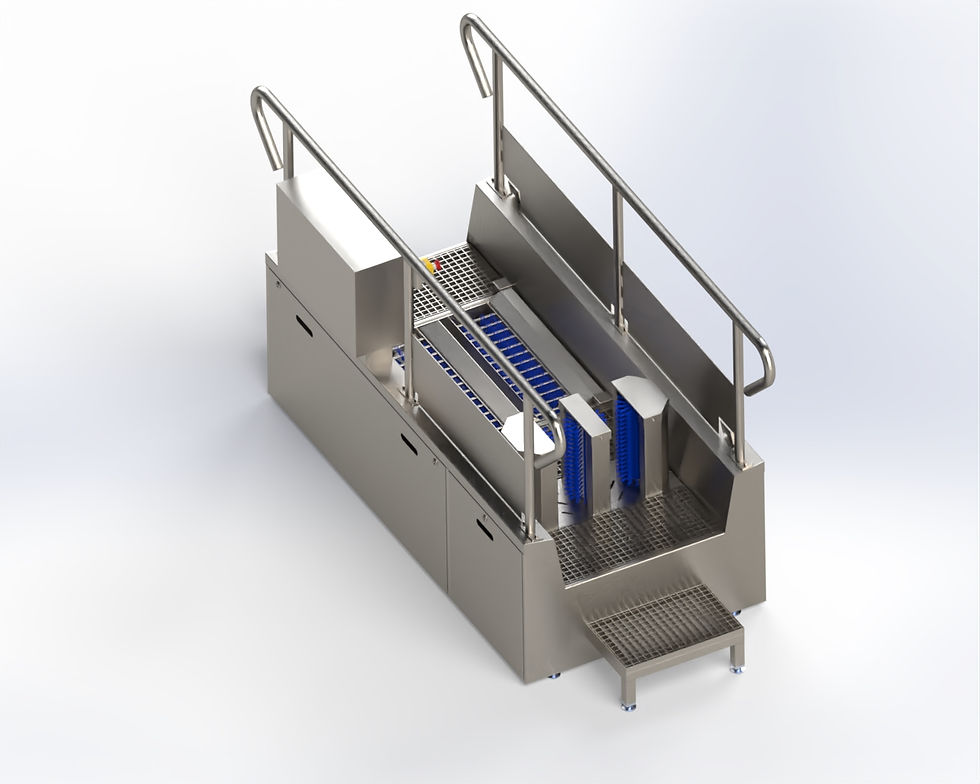
Automatic Boot Washers, Automatic Sole Washers are key components of modern Food Factory Equipment, but their effectiveness depends on far more than simply installing the equipment. In today's food manufacturing facilities, Hygienic Stainless Steel Equipment should form part of a carefully planned personnel hygiene system that controls movement, reduces contamination risks and supports consistent compliance every day.

Hygiene Zones Are Only as Effective as Their Design
Food manufacturers invest heavily in production equipment, cleaning procedures and quality systems, yet one of the most important contamination control points is often the route employees take into production.
A well-designed hygiene entrance creates a clear, controlled transition between low-risk and high-care areas. Every step—from changing footwear and washing hands through to sanitising boots—should follow a logical sequence that becomes second nature for employees.
In our experience, the most successful hygiene areas are those that make the correct behaviour the easiest behaviour. When personnel can move through the process quickly and intuitively, compliance naturally improves.
This is where carefully selected Hygiene and Safety Equipment plays an important role in supporting both food safety and operational efficiency.
Karl Hewines, Sales Manager at Gilwood, comments: "We often visit factories where the right equipment is already there, but the layout just isn't working. Sometimes simply moving a boot washer or improving the flow through the hygiene area can make a bigger difference than installing more equipment."
We've worked with food manufacturers to redesign hygiene entrances where relatively small changes to personnel flow have delivered significant improvements. By considering how employees move through changing areas, handwashing stations, boot washers and into production, businesses can create a more intuitive process that supports hygiene compliance while reducing delays during busy shift changes.
Automatic Boot Washers Should Be Part of a Complete Hygiene Process
An Automatic Boot Washer is far more than a standalone cleaning machine. It should form part of an integrated personnel hygiene station designed around how people actually move through the factory.
Typically, an effective hygiene entrance may include:
Hand sanitising systems
Hygiene Turnstiles
Controlled access into production
Each stage supports the next, helping ensure hygiene procedures are completed consistently before personnel enter food production areas.
Rather than relying solely on staff remembering each step, the layout itself encourages correct hygiene practices.
Personnel Flow Can Be Just as Important as the Equipment
One of the most common challenges manufacturers face isn't necessarily inadequate hygiene equipment—it's poor personnel flow.
We've seen hygiene stations where employees cross paths between clean and dirty areas, where queues develop during shift changes, or where equipment has been positioned in a way that encourages shortcuts. These issues don't usually arise because the equipment is unsuitable, but because the overall process hasn't been considered.
When planning a hygiene entrance, manufacturers should consider:
The number of personnel using the area
Shift change volumes
Factory layout
Available floor space
Separation of clean and dirty routes
Future expansion requirements
Considering these factors during the design stage often leads to a more efficient, user-friendly hygiene area that continues to perform well as production demands change.

Choosing the Right Automatic Sole Washer for Your Facility
Not every production environment requires the same footwear hygiene solution.
An Automatic Sole Washer may be ideal where only the underside of footwear requires cleaning, while an Automatic Shoe & Sole Washer provides more comprehensive cleaning for facilities operating in higher-risk environments.
The most suitable solution will depend on several factors, including:
Type of food being processed
Hygiene zoning requirements
Frequency of personnel movement
Production environment
Cleaning procedures
Available space
From our experience, selecting equipment purely on specification can overlook practical considerations such as operator throughput, ease of cleaning and future maintenance. Taking a wider view often results in a more effective long-term solution.
Hygiene Turnstiles Help Standardise Compliance
Even with clearly documented hygiene procedures, maintaining consistent compliance across every shift can be challenging.
Hygiene Turnstiles provide an additional level of control by helping ensure personnel complete each required hygiene step before entering production.
When integrated with hand washing, sanitising and footwear cleaning systems, turnstiles create a managed entry process that reduces reliance on individual behaviour.
Many food manufacturers are increasingly adopting integrated hygiene entrances because they provide:
Improved consistency
Better personnel control
Reduced opportunities for shortcuts
Enhanced audit confidence
More structured movement into production
Rather than acting as a barrier, a well-designed hygiene entrance helps create a smooth, repeatable process that becomes part of everyday operations.
Hygienic Stainless Steel Equipment Built for Demanding Food Environments
Every item of equipment within a hygiene entrance should be designed to withstand demanding food production conditions.
High-quality Stainless Steel Factory Equipment offers excellent durability, corrosion resistance and ease of cleaning, making it the preferred material for food manufacturing environments.
When specifying Hygienic Manufacturing and Processing Equipment, manufacturers should look for:
Hygienic design principles
Smooth, easy-to-clean surfaces
Robust stainless steel construction
Minimal dirt traps
Durable components suitable for continuous use
Designs that simplify routine cleaning and maintenance
In food manufacturing, hygienic design is about far more than selecting stainless steel. Equipment should be engineered to minimise dirt traps, simplify cleaning and withstand years of intensive daily use, helping manufacturers maintain high hygiene standards while reducing maintenance requirements and downtime.
Well-designed equipment not only supports hygiene standards but also reduces downtime and contributes to lower lifetime operating costs.
Working with Experienced Industrial Boot Washer Manufacturers
Selecting experienced Industrial Boot Washer manufacturers means choosing a partner that understands food factory operations—not simply footwear cleaning equipment.
At Gilwood, we know that every production facility is different. A ready meal manufacturer, dairy processor or fresh produce facility will each have unique personnel flows, hygiene zoning requirements and operational challenges.
That is why we believe every hygiene entrance should be considered as part of the wider factory layout rather than as an isolated purchase.
We've found that involving hygiene equipment specialists early in a project often identifies opportunities to improve personnel movement, maximise available space and simplify future maintenance before installation even begins.
This collaborative approach helps ensure the finished solution supports productivity as well as hygiene.

Practical Experience: Looking Beyond the Boot Washer
One of the most valuable lessons we've learned from working with food manufacturers is that the most successful hygiene projects rarely focus on a single piece of equipment.
Instead, they consider the complete journey that personnel make from entering the building to stepping onto the production floor.
By combining Automatic Boot Washers, Automatic Sole Washers, Hygiene Turnstiles, washroom equipment and changing room furniture into a cohesive hygiene entrance, manufacturers can improve compliance, streamline personnel flow and create facilities that are easier to manage as production grows.
Ultimately, the goal is not simply cleaner footwear—it's creating a hygiene process that employees can follow consistently, every single day.
Speak to Gilwood About Your Hygiene Entrance
Whether you're building a new food production facility or upgrading an existing hygiene area, Gilwood designs and manufactures high-quality Food Factory Equipment and Hygienic Stainless Steel Equipment to support safer, more efficient food manufacturing.
Our experienced team can help you develop a complete hygiene entrance incorporating Automatic Boot Washers, Automatic Sole Washers, Automatic Shoe & Sole Washers, Hygiene Turnstiles and complementary hygienic equipment tailored to your factory layout and production requirements.
Contact Gilwood today to discuss your project, or explore our range of hygienic food factory equipment to discover solutions that improve hygiene, compliance and operational efficiency.

Comments